An 18F-Choline PET/CT scan is a specialised nuclear medicine imaging test used to detect and localise disease with high precision. Most commonly, doctors recommend this scan for prostate cancer evaluation, particularly when recurrence or metastasis is suspected. However, its clinical use has expanded significantly in recent years.
As medical imaging has evolved, 18F-Choline PET/CT has also become an important tool for identifying small or ectopic parathyroid adenomas, especially in patients with hyperparathyroidism when conventional imaging fails. Consequently, this scan now plays a dual role in both oncology and endocrine evaluation.
Patients across Chandigarh, Mohali, and Panchkula (Tricity) are referred for 18F-Choline PET/CT when precise localisation is essential for diagnosis and treatment planning.
What Is an 18F-Choline PET/CT Scan?
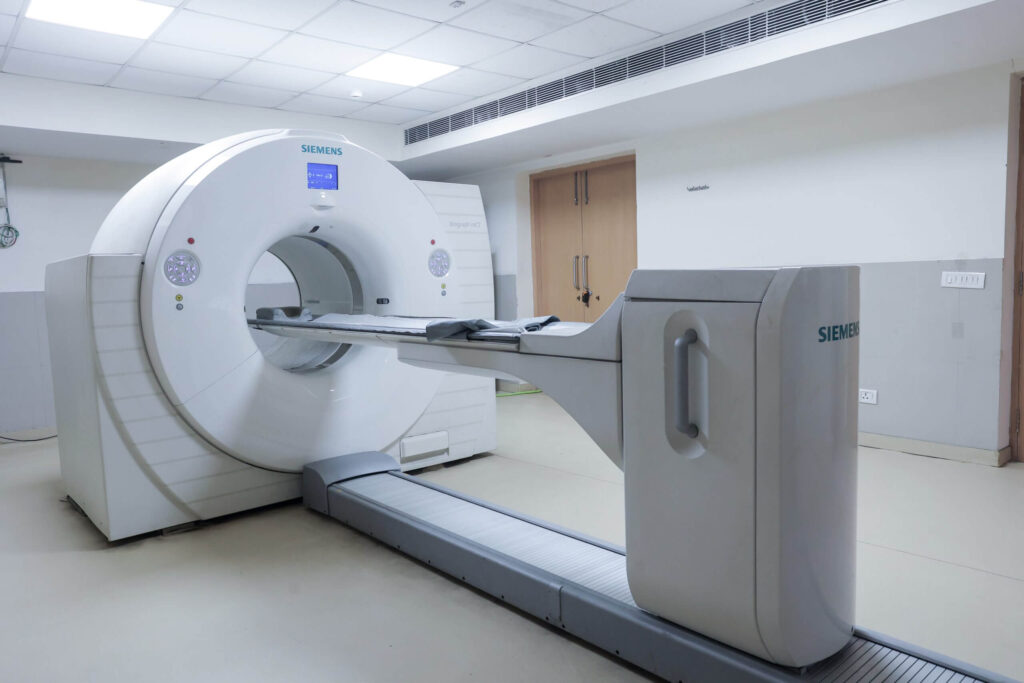
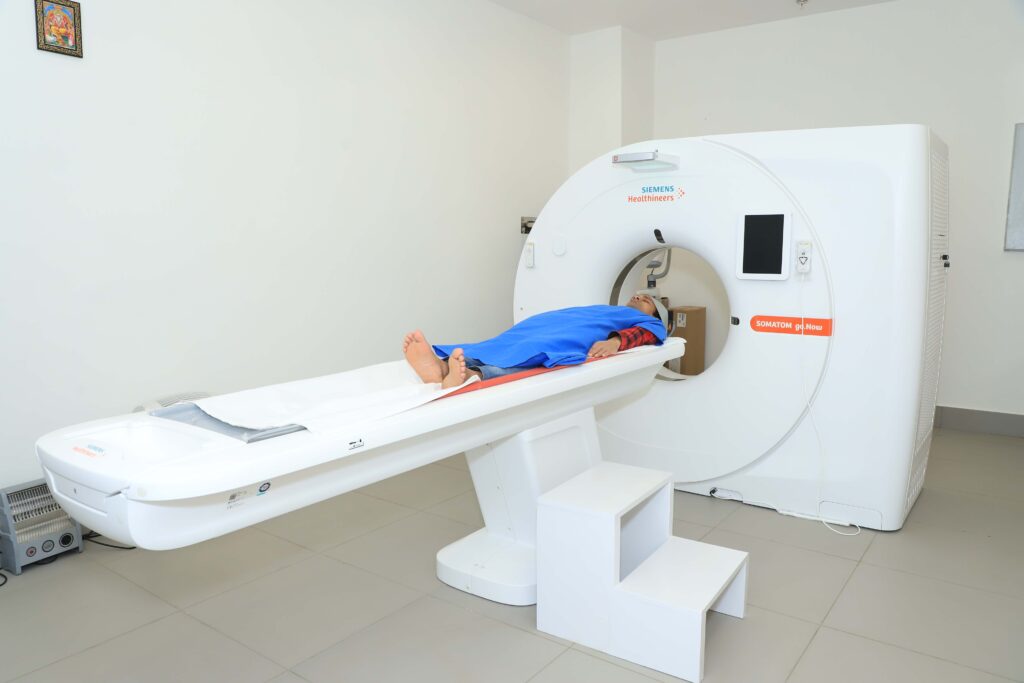
An 18F-Choline PET/CT scan combines functional PET imaging with anatomical CT imaging. It uses a choline-based radiotracer labelled with Fluorine-18, which highlights areas of abnormal cellular activity.
Because rapidly dividing cancer cells and overactive parathyroid tissue require increased cell membrane synthesis, they absorb more choline. As a result, these areas become clearly visible on PET-CT images, allowing accurate identification of disease location and extent.
Clinical Uses of 18F-Choline PET/CT
Role in Prostate Cancer Evaluation
18F-Choline PET/CT is widely used in prostate cancer care, particularly in the following situations:
- Detection of recurrent prostate cancer
- Evaluation of metastatic disease
- Disease staging and restaging
- Assessment when PSA levels rise after treatment
Importantly, this scan helps locate disease even when conventional imaging does not provide clear answers. Therefore, it supports timely and targeted clinical decisions.
Role in Parathyroid Adenoma Localisation
In addition to oncology, 18F-Choline PET/CT is increasingly used to identify parathyroid adenomas in patients with hyperparathyroidism. This becomes especially valuable when ultrasound or sestamibi scans are inconclusive.
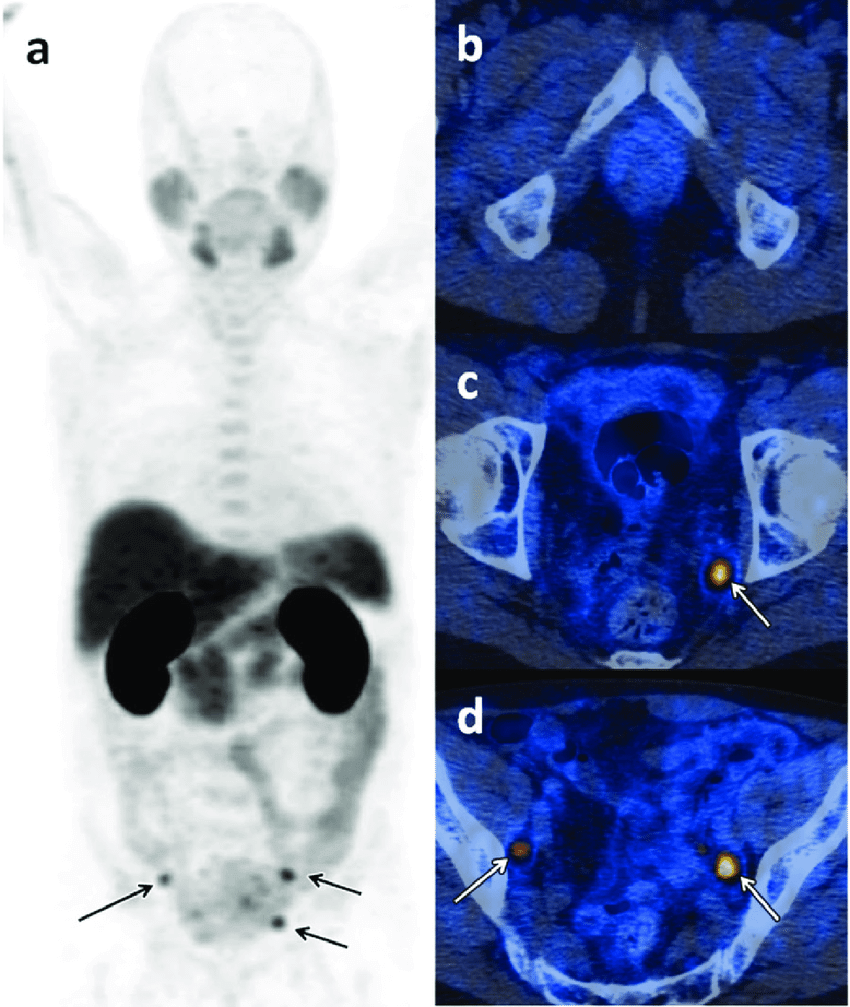
By accurately locating small or ectopic adenomas, 18F-Choline PET/CT assists surgeons in planning focused and minimally invasive procedures, thereby improving surgical outcomes.
How 18F-Choline PET Works
First, a small amount of 18F-Choline radiotracer is administered intravenously. Next, the tracer circulates through the body and accumulates in tissues with increased cell membrane turnover.
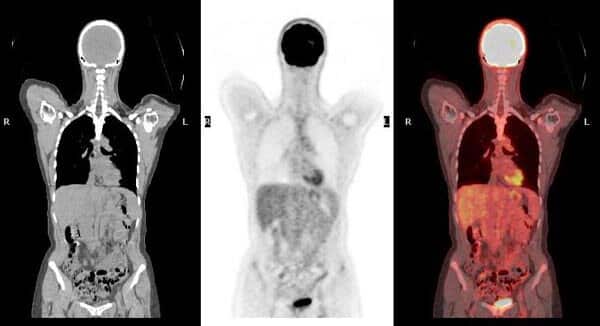
Subsequently, the PET scanner detects tracer uptake, while the CT component provides precise anatomical detail. Together, these images create a three-dimensional view of abnormal tissue, enabling accurate localisation and assessment.
18F-Choline PET vs Routine PET Imaging
Although both are PET-CT scans, their purposes differ significantly. Routine PET imaging often focuses on glucose metabolism and is used broadly across many cancers. However, some conditions, such as prostate cancer or parathyroid adenomas, may not show sufficient glucose uptake.
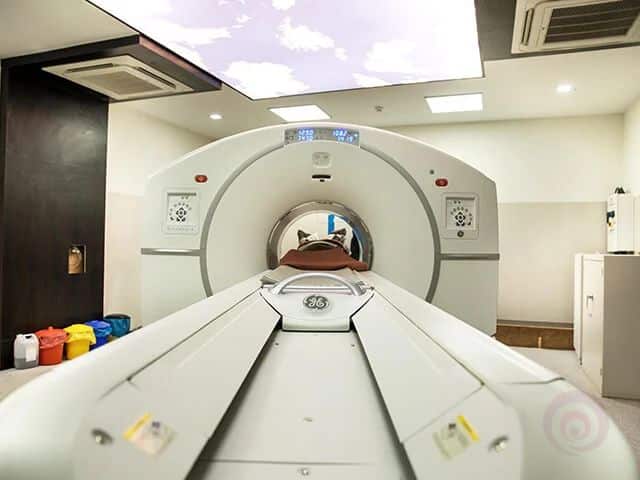
In contrast, 18F-Choline PET/CT targets cell membrane metabolism, making it more suitable for detecting certain cancers and endocrine abnormalities. Therefore, doctors select this scan based on specific clinical needs.
Preparation Guidelines for 18F-Choline PET
Preparation for an 18F-Choline PET/CT scan is generally straightforward. However, patients should carefully follow instructions provided by their doctor or imaging centre. These may include guidance related to fasting, medication use, or prior imaging studies.
By following preparation guidelines correctly, patients help ensure reliable imaging and accurate interpretation.
Diagnostic Accuracy and Clinical Importance
18F-Choline PET/CT offers high diagnostic accuracy when used for appropriate indications. It helps detect disease at an early stage, identify recurrence, and guide treatment decisions with confidence.
Furthermore, the detailed information provided by this scan supports personalised treatment planning and effective follow-up care, thereby improving overall clinical outcomes.
Why a Doctor’s Recommendation Is Required
An 18F-Choline PET/CT scan is performed only when clinically indicated. Therefore, a doctor’s referral is essential to confirm the appropriateness of the scan and ensure correct protocol selection.
Medical guidance is also necessary for accurate interpretation of results and for integrating scan findings into diagnosis, treatment planning, or surgical decision-making.
18F-Choline PET/CT Services Across Tricity
Patients from Chandigarh, Mohali, and Panchkula are commonly referred for 18F-Choline PET/CT when advanced imaging is required. This scan is typically advised by oncologists, urologists, endocrinologists, or surgeons as part of comprehensive care.
Because of its specialised nature, 18F-Choline PET/CT is used selectively to answer specific clinical questions.
For general PET-CT imaging and routine diagnostic evaluation, patients may refer to our detailed PET Scan in Chandigarh guide.
Frequently Asked Questions About 18F-Choline PET
What is 18F-Choline PET used for?
It is used for prostate cancer evaluation and localisation of parathyroid adenomas, especially when conventional imaging is inconclusive.
How is 18F-Choline PET different from other PET scans?
This scan targets cell membrane metabolism, whereas routine PET scans often measure glucose metabolism.
Does the scan require a doctor’s prescription?
Yes. A valid medical referral is required.
Is 18F-Choline PET safe?
Yes. The scan is considered safe when performed under medical supervision using approved protocols.
