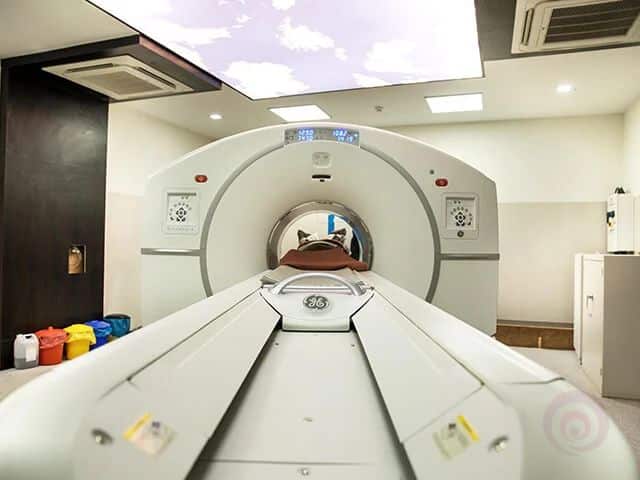
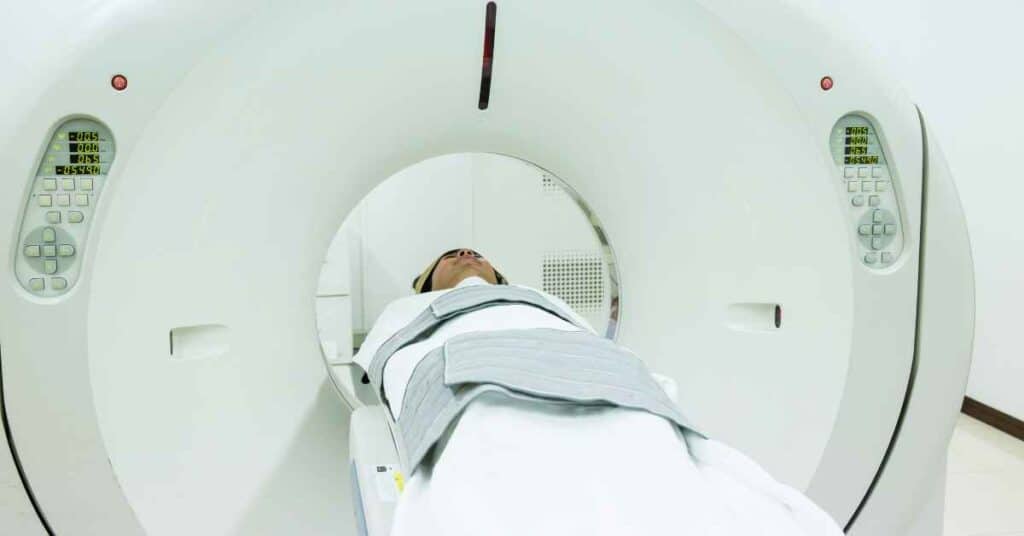
Positron Emission Tomography–Computed Tomography, commonly known as PET-CT, is an advanced hybrid imaging modality that plays a central role in modern diagnostic medicine.
It is widely used in oncology, cardiology, and neurology for disease detection, staging, treatment planning, and response assessment.
Continuous technological advancements have significantly enhanced the performance of PET-CT systems, resulting in improved image quality, higher diagnostic accuracy, and increased patient safety.
The latest PET-CT scan technology integrates digital detector systems, time-of-flight measurements, artificial intelligence–assisted image reconstruction, and optimized radiation dose management to support precise and reliable clinical evaluation.
Principles of PET-CT Imaging
PET-CT combines functional and anatomical imaging in a single examination. The PET component evaluates metabolic and molecular activity by detecting the distribution of radiotracers administered to the patient, most commonly fluorodeoxyglucose.
Tissues with increased metabolic demand demonstrate higher tracer uptake, allowing visualization of pathological processes at the cellular level.
The CT component provides high-resolution anatomical images that enable accurate localization of functional abnormalities.
The fusion of metabolic and structural information allows clinicians to correlate biological activity with precise anatomical detail, enhancing diagnostic confidence.
Limitations of Conventional Imaging Methods
Conventional imaging modalities such as radiography, ultrasound, and standalone computed tomography primarily assess structural changes within tissues and organs.
While these techniques are essential in routine diagnostics, they may not detect early disease processes that manifest initially as metabolic or functional alterations.
Many pathological conditions, particularly malignancies, exhibit changes in cellular metabolism before structural abnormalities become apparent.
PET-CT addresses this limitation by identifying functional abnormalities at an early stage, allowing timely diagnosis and improved clinical management.
Advances in PET-CT System Design
Early PET-CT systems relied on analog detector technology with limited sensitivity and temporal resolution. These systems were associated with longer acquisition times, higher image noise, and increased radiation exposure.
Recent advancements have led to the development of PET-CT scanners with digital detector architecture, enhanced signal processing, and advanced computational algorithms.
These improvements have resulted in superior spatial resolution, increased lesion detectability, reduced scan duration, and optimized radiation dose delivery, aligning PET-CT imaging with contemporary clinical standards.
Digital Detector Technology and Image Quality
The introduction of fully digital detector systems represents a major advancement in PET-CT technology. Digital detectors directly convert scintillation events into digital signals, providing improved timing resolution and higher sensitivity compared to analog systems. This allows accurate detection of low-level radiotracer uptake, facilitating identification of small or early-stage lesions. Enhanced detector efficiency also enables high-quality imaging with lower radiotracer doses, contributing to improved patient safety without compromising diagnostic performance.
Time-of-Flight Measurement and Signal Localization
Time-of-flight technology enhances PET image reconstruction by measuring the precise difference in arrival times of gamma photons generated during positron annihilation. Incorporation of this temporal information allows more accurate localization of the annihilation event along the line of response. The clinical benefits include improved contrast resolution, reduced image noise, and shorter acquisition times. These advantages are particularly relevant in patients with larger body habitus and in anatomically complex regions where image degradation was previously a challenge.
Artificial Intelligence in Image Reconstruction and Analysis
Artificial intelligence has become an integral component of contemporary PET-CT imaging workflows. Advanced reconstruction algorithms improve image quality by reducing noise, enhancing spatial resolution, and standardizing quantitative measurements. These techniques enable diagnostically reliable images to be obtained from lower-count data, supporting radiation dose reduction strategies. Artificial intelligence tools also assist in lesion detection, segmentation, and quantitative analysis, contributing to improved consistency and accuracy in image interpretation.
Radiation Dose Optimization and Patient Safety
Radiation exposure remains an important consideration in diagnostic imaging. The latest PET-CT systems incorporate multiple strategies to minimize radiation dose while maintaining diagnostic accuracy. These include high-sensitivity digital detectors, adaptive dose modulation, and advanced reconstruction techniques. Modern PET-CT scanners achieve high-quality imaging with significantly lower radiation exposure compared to earlier generations. This is particularly important for pediatric patients, individuals undergoing repeated follow-up examinations, and patients requiring long-term disease surveillance.
Motion Management and Respiratory Gating
Physiological motion, particularly respiratory movement, can adversely affect image quality in PET-CT studies of the thorax and upper abdomen. Contemporary PET-CT scanners incorporate motion correction and respiratory gating techniques that synchronize image acquisition with the patient’s breathing cycle. These approaches reduce motion-related artifacts, improve lesion delineation, and enhance quantitative accuracy. Improved motion management is essential for reliable evaluation of pulmonary, hepatic, and mediastinal lesions.
Extended Field-of-View and Whole-Body Imaging
Modern PET-CT systems offer extended axial field-of-view capabilities, allowing larger anatomical regions to be imaged simultaneously. This increases system sensitivity and reduces overall scan time, enabling comprehensive whole-body imaging in a single session. Extended coverage enhances detection of metastatic disease and improves staging accuracy in oncology patients. Reduced acquisition time also improves patient comfort and operational efficiency in clinical practice.
Radiotracer Development and Molecular Imaging
Although fluorodeoxyglucose remains the most widely used PET radiotracer, advances in radiopharmaceutical development have expanded the clinical applications of PET-CT. Modern systems support a range of disease-specific radiotracers that target particular molecular pathways or receptor systems. These tracers are used in the evaluation of prostate cancer, neuroendocrine tumors, neurological disorders, and cardiovascular disease. Molecular imaging with PET-CT provides insights into disease biology that extend beyond anatomical assessment, supporting individualized diagnostic evaluation.
Clinical Applications in Oncology
PET-CT is a fundamental tool in oncological imaging, providing critical information for diagnosis, staging, treatment planning, and response assessment. By identifying metabolically active tumor tissue, PET-CT enables differentiation between benign and malignant lesions with high accuracy. Accurate staging facilitates appropriate therapeutic selection and helps avoid unnecessary interventions. Advanced PET-CT technology improves detection of nodal involvement and distant metastases, contributing to comprehensive disease assessment.
Assessment of Treatment Response and Disease Monitoring
PET-CT is particularly valuable for evaluating treatment response, as changes in metabolic activity often occur before structural changes become evident. Quantitative PET parameters allow objective assessment of therapeutic effectiveness and early identification of inadequate response. The reproducibility of measurements provided by modern PET-CT systems supports reliable longitudinal monitoring and early detection of disease recurrence, enabling timely clinical intervention.
Applications in Cardiology and Neurology
Beyond oncology, PET-CT has established roles in cardiology and neurology. In cardiac imaging, PET-CT is used to assess myocardial perfusion, viability, and inflammatory conditions. In neurology, PET-CT contributes to the evaluation of epilepsy, cognitive disorders, and neurodegenerative diseases through analysis of cerebral metabolism and receptor activity. Advances in image resolution and quantitative accuracy have enhanced the clinical utility of PET-CT across these specialties.
Patient Comfort and Clinical Workflow
Modern PET-CT scanners are designed to improve patient comfort and clinical workflow efficiency. Shorter scan times, automated acquisition protocols, and streamlined imaging processes reduce patient discomfort and improve compliance. Wider gantry openings and quieter system operation further enhance patient experience. Improved workflow efficiency supports timely image interpretation and clinical decision-making.
Importance of Technology and Expertise
The diagnostic accuracy of PET-CT imaging depends on both the technological capabilities of the scanner and the expertise of the interpreting clinicians. Facilities equipped with advanced PET-CT systems and experienced nuclear medicine specialists are better positioned to provide accurate and clinically meaningful results. Adherence to standardized imaging protocols and quality assurance practices is essential for maintaining diagnostic reliability.
Future Perspectives in PET-CT Imaging
Ongoing research in PET-CT technology focuses on further expansion of field-of-view, development of novel radiotracers, and refinement of artificial intelligence applications. These advancements aim to enhance sensitivity, reduce radiation exposure, and provide comprehensive evaluation of systemic disease processes. Continued innovation is expected to further strengthen the role of PET-CT in precision diagnostic medicine.
Conclusion
The latest PET-CT scan technology represents a significant advancement in diagnostic imaging, combining digital detector precision, time-of-flight accuracy, artificial intelligence–assisted reconstruction, and optimized radiation dose management. These developments have enhanced the diagnostic capabilities of PET-CT across multiple clinical disciplines. By enabling early disease detection, accurate staging, reliable treatment monitoring, and comprehensive whole-body evaluation, modern PET-CT imaging supports informed clinical decision-making and improved patient care.

Subscribe
0 Comments

Comments