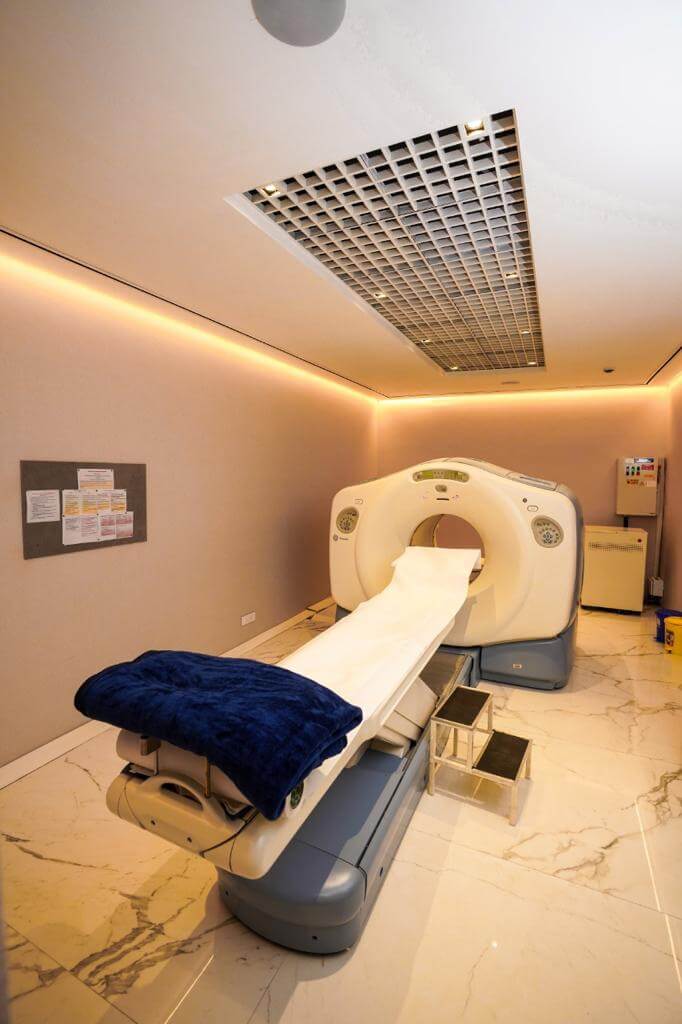
PET/CT precisely identifies metabolically active lymph nodes, guiding accurate cancer staging and personalized treatment plans. At MRI Chandigarh, receive expert interpretation and fast reports. Book now: 8699572364 | [email protected] | www.mrichandigarh.com/pet-scan
Quick Answer
PET/CT scans detect lymph nodes with elevated metabolic activity (high FDG uptake), helping oncologists determine cancer spread and plan treatment. “Hot” nodes trigger biopsy consideration, while normal nodes support conservative management. Results integrate with clinical data for optimal staging.
Understanding PET/CT Technology
PET/CT combines positron emission tomography (PET)-which visualizes cellular metabolism through radioactive FDG glucose-and computed tomography (CT) for anatomical precision. This dual-modality approach reveals lymph nodes that are both enlarged and metabolically hyperactive, providing superior diagnostic confidence over standalone imaging.
Key technical advantage: PET/CT’s fusion images correlate “hot spots” (SUV > 2.5-3.0 typically) with precise nodal anatomy, enabling targeted biopsies and reducing unnecessary procedures.
Clinical Importance of Lymph Node Staging
Lymph nodes serve as the primary pathway for cancer metastasis. Nodal involvement frequently upstages disease (TNM classification), transforming localized cancer into regional/systemic malignancy.
Direct treatment impact:
- Stage I-II → Surgery/radiation alone
- Stage III → Chemotherapy + surgery/radiation
- Stage IV → Systemic therapy prioritized
Accurate nodal assessment therefore determines prognosis, therapy intensity, and survival outcomes.
How Radiologists Interpret PET/CT Lymph Node Findings
Board-certified radiologists systematically evaluate:
- FDG uptake intensity (SUVmax): Values >3.0 raise concern; >5.0 strongly suggest malignancy
- Nodal morphology (CT): Size >1cm short axis, irregular borders, central necrosis
- Distribution pattern: Unilateral vs bilateral; regional vs distant
- Background comparison: Mediastinal blood pool, liver parenchyma serve as reference
Pro tip: Asymmetric, solitary nodes with SUV > liver demonstrate higher malignancy risk than diffuse reactive changes.
Differential Diagnosis: “Hot” Nodes Aren’t Always Cancer
Elevated FDG avidity occurs across conditions:
| Finding | Common Causes | Next Steps |
|---|---|---|
| High SUV, focal | Metastasis, lymphoma | Biopsy recommended |
| Moderate SUV, diffuse | Reactive (infection), sarcoidosis | Clinical correlation ± short-interval follow-up |
| High SUV, post-treatment | Inflammation, infection | Compare prior studies |
| Low SUV, enlarged | Early/low-grade malignancy | Consider MRI/ultrasound |
Critical insight: False positives occur in 20-30% of cases due to inflammation; tissue sampling remains the gold standard.
PET/CT Performance Metrics
Strengths:
- Sensitivity: 80-95% for nodal metastases >5mm
- Specificity: 75-90% (varies by tumor type)
- Changes management in 30-50% of cases
Limitations:
- Misses microscopic disease (<2-3mm)
- Low avidity tumors (bronchioloalveolar, carcinoid)
- Post-therapy inflammation confounds interpretation
SUV thresholds by tumor type:
Lymphoma: SUV >10 highly suspicious
Lung cancer: SUV >4 concerning
Head/neck: SUV >3.5 prompts biopsy
Standard Clinical Algorithms
Suspicious PET/CT node (SUV >3.0 + concerning CT features)
↓
Multidisciplinary discussion within 48-72 hours
↓
- Ultrasound-guided FNA/core biopsy (preferred)
- EBUS-TBNA for mediastinal nodes
- Surgical sampling if non-diagnostic
↓
Pathology confirms/rejects nodal involvement
Tumor-Specific PET/CT Utility
Lymphoma (most valuable)
- Lugano criteria staging
- Deauville score for response assessment
- Bone marrow evaluation
Non-small cell lung cancer
- N0-3 mediastinal staging
- Guides surgical candidacy
- Detects occult M1 disease
Head & neck squamous cell carcinoma
- Detects occult nodal metastases (30% of cases)
- Guides neck dissection planning
- Monitors post-treatment necks
Patient Experience at MRI Chandigarh
Preparation protocol (ensures diagnostic quality):
- Fast 6 hours (water permitted)
- Blood glucose <180 mg/dL
- No exercise 24 hours prior
- Comfortable clothing (no metal)
Scan timeline: 20-minute procedure following 60-minute FDG uptake period
Our advantage: Same-day reporting for urgent oncology cases; direct radiologist consultation available.
When MRI Chandigarh Delivers Superior Outcomes
✓ State-of-the-art PET/CT with dose-efficient protocols
✓ Fellowship-trained oncologic radiologists
✓ 24-hour preliminary reports; final within 48 hours
✓ Coordinated oncology referral network
✓ Multilingual patient support
Trusted by Chandigarh’s leading oncologists for reproducible, clinically actionable results.
Frequently Asked Questions
Do all suspicious lymph nodes need biopsy?
No. Clinical context guides management-low-risk features may warrant surveillance.
What SUV value definitely means cancer?
No absolute threshold exists. SUV >10 rarely benign; SUV 2.5-5.0 requires correlation.
Can infection mimic cancer on PET/CT?
Yes. Recent URI, dental infections, or autoimmune disease commonly cause false positives.
How soon are results available?
Preliminary reports within 24 hours; final comprehensive reports within 48 hours.
Is PET/CT safe for diabetics?
Yes, with proper glucose control (<180 mg/dL). Our team provides detailed instructions.
Book Your PET/CT Scan Today
Multiple convenient options:
Immediate Appointments: 8699572364
Expert Consultation: [email protected]
Online Booking: www.mrichandigarh.com/pet-scan

Subscribe
0 Comments

Comments